Is Vein Treatment Covered by Insurance? How Approval Actually Works
The answer most patients are looking for is usually yes. When your vein problem is medical rather than cosmetic, treatment is covered by most insurance plans, including Medicare and Medicaid. The word that does all the work in that sentence is medical. Insurance companies draw a firm line between veins that cause real symptoms and health problems and veins that are simply a matter of appearance, and understanding where that line sits is the key to knowing what your plan will and will not pay for.
At Lake Area Vein Center at Sulphur Surgical Clinic, we walk patients across Sulphur, Lake Charles, and the surrounding communities through this process every week. The paperwork can feel intimidating from the outside, but the pathway to approval is actually fairly predictable once you understand what your insurer is looking for. Here is how coverage really works, step by step.
Medical vs. Cosmetic: The Distinction That Drives Everything
Nearly every coverage question comes back to one issue: is your treatment addressing a medical condition or improving appearance?
Medical vein treatment targets chronic venous insufficiency, the underlying valve failure that causes blood to pool in your legs. This is the condition behind aching, heaviness, swelling, night cramps, skin discoloration near the ankle, and in advanced cases, venous ulcers. Because these are genuine health problems that tend to worsen without treatment, insurers treat correcting them the same way they treat any other medically necessary procedure. If you notice skin breakdown, an open sore, or a non-healing wound near the ankle, do not wait on the insurance process: contact our office or your physician promptly, because these are signs of advanced disease that need timely care.
Cosmetic vein treatment addresses veins that look bothersome but do not cause symptoms or health consequences. The clearest example is spider veins, those fine red, blue, or purple clusters at the surface of the skin. When there is no underlying reflux and no symptoms, treating them is considered elective, and insurance does not cover it.
The important thing to understand is that this is not a judgment call your surgeon makes casually. Insurers want objective evidence, and the entire approval process is built around gathering it.
The Approval Pathway, Step by Step
Step One: Ultrasound Mapping Documents the Reflux
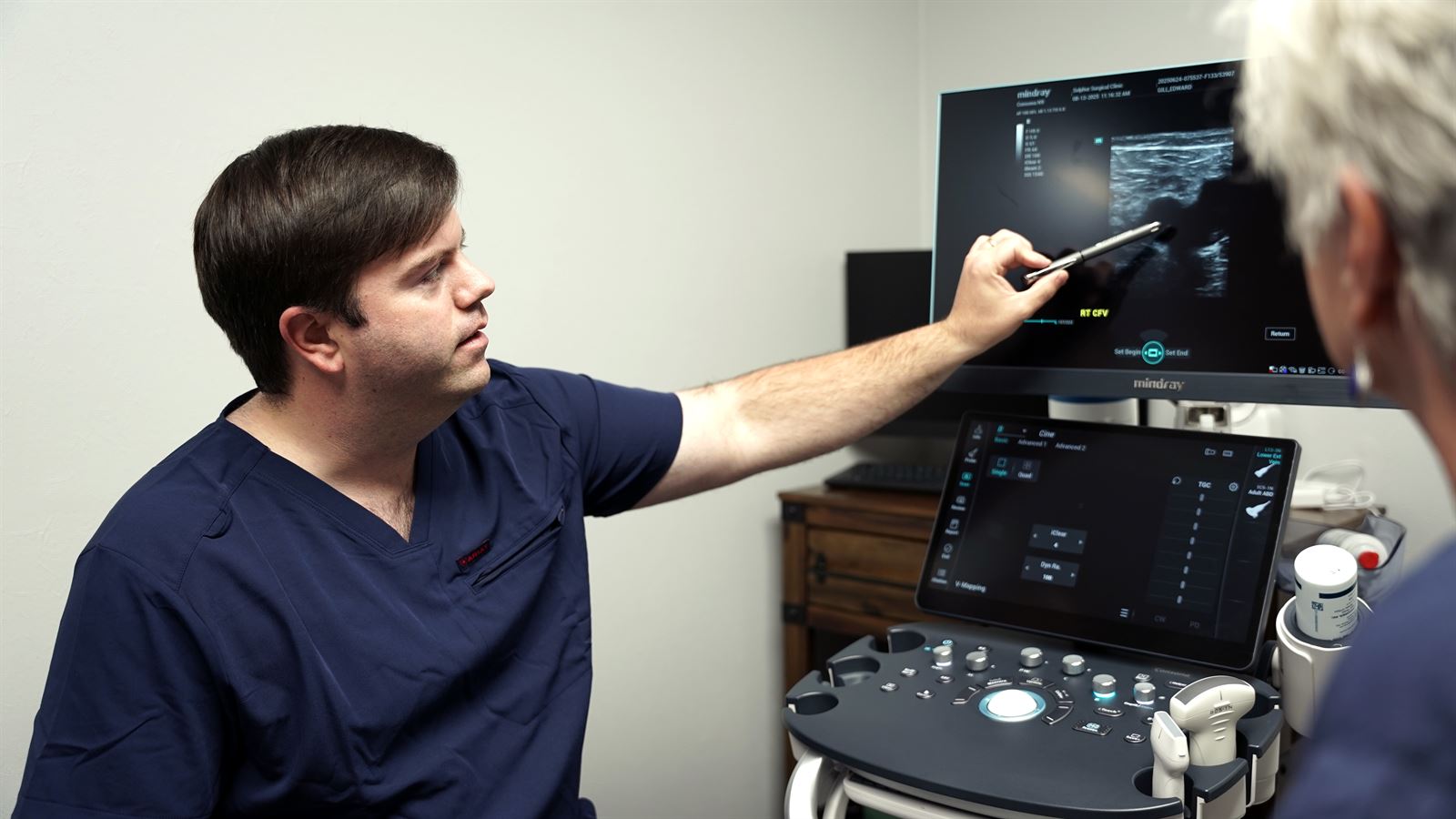
Everything starts with a venous reflux ultrasound. This painless, in-office study takes about 60 minutes and uses sound waves to watch blood move through your leg veins in real time. It shows which valves are failing, how severe the backward flow is, and which veins are causing your symptoms.
For insurance purposes, the ultrasound is the foundation of your case. It provides the objective measurement (reflux confirmed, with specific timing thresholds that most plans require) that separates a medical diagnosis from a cosmetic complaint. Without this documentation, no amount of symptom reporting will get a procedure approved.
Step Two: Symptoms and Findings Establish Medical Necessity
Alongside the ultrasound, your surgeon documents the clinical picture: the pain and heaviness you describe, visible varicose veins, swelling that leaves sock-line marks, skin changes, or any wounds near the ankle. Together, the imaging and the exam findings build the record of medical necessity that your insurer requires.
This is why the consultation matters as much as the ultrasound. A patient with clear reflux on imaging but no documented symptoms is a harder case than one whose chart reflects both. When we see you, we are not only diagnosing your condition; we are building the record that supports coverage.
Step Three: Many Plans Require a Conservative-Therapy Period First
Here is the step that surprises patients most. Even with confirmed reflux and documented symptoms, many insurance plans will not authorize a procedure until you have completed a trial of conservative therapy, most often a period of wearing graduated compression stockings, typically somewhere in the range of six to twelve weeks depending on the plan.
The logic from the insurer’s side is that some patients improve enough with compression that a procedure becomes unnecessary. Whether or not that turns out to be true for you, the trial has to be documented before authorization moves forward. It can feel like a delay, but it is a normal and expected part of the pathway, and skipping it is the most common reason a claim gets denied. If compression does not relieve your symptoms, which is common when significant reflux is present, you have then satisfied the requirement and cleared the way for treatment.
Step Four: Authorization
Once the ultrasound, the clinical documentation, and the conservative-therapy trial are all in place, we submit for prior authorization. This is the formal request asking your insurer to confirm coverage before the procedure. When the medical necessity is well documented, approval for procedures like EVLT and Varithena is the typical outcome.
Our Team Handles the Paperwork
You do not have to assemble any of this yourself. Coordinating the ultrasound results, the clinical notes, the compression-therapy timeline, and the authorization submission is work our staff does on your behalf. We verify your benefits before your procedure so there are no surprises about what is covered and what your out-of-pocket portion will be.
That matters because prior authorization is where many patients get stuck when they try to navigate it alone; a missing document or an incomplete conservative-therapy record can stall a claim for weeks. Handling that process is part of the care we provide, not an afterthought. You can read more about how we work with insurers on our insurance page.
The Plans We Accept
Lake Area Vein Center accepts 49 plans across 9 carrier groups, covering the major commercial insurers as well as Medicare and Medicaid. That range means most patients in Calcasieu Parish and the surrounding area (Sulphur, Lake Charles, Westlake, Moss Bluff, DeQuincy, and beyond) are already in network with us. Our full plan directory is available online so you can check before you call, though our staff is happy to verify your specific coverage over the phone.
No referral is needed to schedule a consultation, so you can begin the process directly with us rather than waiting on a referral from another office.
What About Spider Veins and Cosmetic Treatment?
Cosmetic spider-vein treatment sits on the other side of the medical line, and it is important to set expectations clearly. We treat cosmetic spider veins with Asclera (polidocanol), an injectable sclerosant that fades those surface clusters. Because there is no underlying medical condition being corrected, Asclera is a self-pay service; insurance does not cover it.
That said, cost does not have to be a barrier. We accept CareCredit financing, which lets patients spread the cost of cosmetic treatment over time. And for patients who assume their visible veins are purely cosmetic, it is worth noting that some are not: if those veins turn out to be fed by underlying reflux, the picture changes, and a reflux ultrasound is what tells the difference. Many people who came in thinking they wanted a cosmetic touch-up learn they have a treatable medical condition that their insurance will help address.
A Typical Path Through the Process
To make this concrete, consider how a common case tends to unfold. A patient comes in with aching, heavy legs that are worse by evening and a few bulging veins on the calf. We perform a reflux ultrasound, which confirms a failing valve in the great saphenous vein. We document the symptoms and findings, then start a compression-therapy trial. Several weeks later, the symptoms persist despite consistent compression use, so we submit for prior authorization with a complete record, and treatment is approved. Every step had a purpose, and none of it required the patient to chase paperwork.
That sequence is typical, not guaranteed; individual plans differ, and your benefits are always verified against your specific policy. But it reflects the ordinary rhythm of how symptomatic vein treatment gets covered.
Frequently Asked Questions
Is varicose vein treatment covered by insurance? In most cases, yes, when the treatment is medically necessary. That means reflux confirmed on ultrasound, documented symptoms such as pain, swelling, or skin changes, and usually a completed trial of conservative therapy. Once those pieces are in place, EVLT and Varithena are covered by Medicare, Medicaid, and most commercial plans.
Why do I have to wear compression stockings before insurance will approve treatment? Many plans require a conservative-therapy period (commonly six to twelve weeks of compression stockings) before they will authorize a procedure. The requirement exists because some patients improve with compression alone. Completing and documenting the trial is a normal part of the pathway, and it is the most common step patients miss when a claim gets denied.
Does insurance cover spider vein treatment? Generally no. Spider veins without underlying reflux or symptoms are considered cosmetic, so treatment with Asclera is self-pay. If those veins are fed by underlying venous reflux, however, the situation may be medical rather than cosmetic, and an ultrasound is what tells the difference.
What if I don’t have insurance or my treatment is cosmetic? We accept CareCredit financing, which lets you spread out-of-pocket costs over time. This applies both to cosmetic treatments like Asclera and to any portion of medical treatment your plan does not cover.
Do I need a referral before you can check my coverage? No. You can call us directly to schedule a consultation and we will verify your benefits as part of the process. No referral from another physician is required.
Find Out What Your Plan Covers — Call Lake Area Vein Center
The only reliable way to know what your insurance will cover is to have the evaluation and let us verify your specific benefits. If you have been putting off treatment because you assumed it would not be covered, that assumption is worth checking — for symptomatic vein disease, coverage is far more common than most patients expect.
Lake Area Vein Center at Sulphur Surgical Clinic serves patients throughout Sulphur, Lake Charles, Westlake, Moss Bluff, DeQuincy, and across Calcasieu Parish. Vein consultations and follow-ups are available at both our Lake Charles and Sulphur offices, and no referral is required to get started.
Call (337) 425-9300 to schedule your consultation and let our team handle the coverage details for you.
Our offices:
- Lake Area Vein Center — Lake Charles office · 1920 W Sale Rd, Suite 5, Lake Charles, LA · (337) 425-9300
- Sulphur Surgical Clinic · 914 Cypress St, Sulphur, LA 70663 · (337) 527-6363
This blog is for general informational purposes only and does not constitute medical advice. Consult with a qualified healthcare provider for guidance specific to your situation.
Ready to map what's going on with your veins?
Every patient starts with a consultation and exam with one of our surgeons; the mapping ultrasound is its own appointment. Call our front desk and we'll get you on the schedule.