Varicose Veins and Pregnancy: What Louisiana Women Need to Know
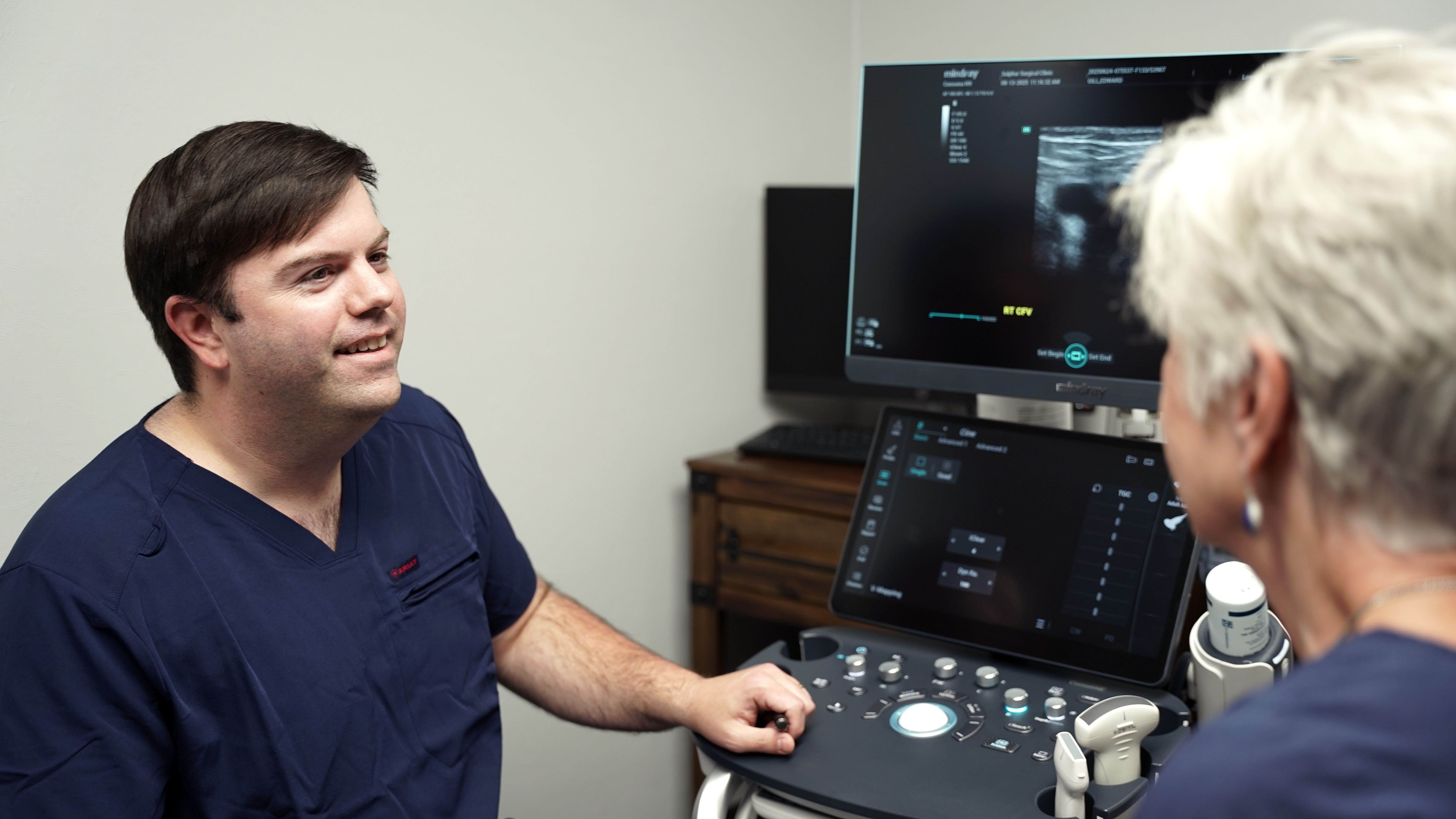
For many women, pregnancy brings something unexpected alongside the joy of a growing family: the sudden appearance of varicose veins. Those ropy, bulging veins on the legs or, for some women, in the vulvar region are not just a cosmetic nuisance. They can cause real discomfort — aching, heaviness, swelling, and pressure — during a time when a woman’s body is already working harder than ever.
If this sounds like your experience during or after pregnancy, you are far from alone. Pregnancy is one of the most significant risk factors for venous disease in women, and many cases of venous insufficiency that persist into a woman’s 40s and 50s trace their origin back to one or more pregnancies decades earlier.
The good news: pregnancy-related varicose veins are well understood, manageable during pregnancy, and highly treatable after delivery. At Lake Area Vein Center at Sulphur Surgical Clinic, our board-certified surgeons help women throughout Sulphur, Lake Charles, and Southwest Louisiana understand their vein health — at every stage of life.
Why Pregnancy Causes Varicose Veins
To understand why pregnancy accelerates venous disease, it helps to know what is happening inside the body during those nine months.
Blood volume increases dramatically. During pregnancy, total blood volume increases by 40–50%. This surge puts significantly more pressure on the venous system, particularly in the legs.
The growing uterus compresses pelvic veins. As the uterus expands, it presses on the large pelvic veins — particularly the inferior vena cava, which carries blood from the legs back to the heart. This compression impedes venous return, raising pressure in the leg veins and accelerating valve wear.
Progesterone relaxes vein walls. Elevated progesterone levels during pregnancy cause smooth muscle in vein walls to relax, reducing the structural support that helps veins maintain their tone. This allows veins to dilate more easily under increased pressure.
Weight gain adds abdominal pressure. Healthy pregnancy weight gain increases intra-abdominal pressure, compounding the effect on pelvic and leg veins.
Together, these factors create the perfect environment for venous valve failure — and once a valve has been stretched or damaged, it does not fully recover. This is why varicose veins that appear during pregnancy may improve somewhat after delivery but rarely disappear entirely, and why they typically worsen with each subsequent pregnancy.
What Pregnancy-Related Varicose Veins Feel Like
Varicose veins during pregnancy are not always primarily about appearance. Many women are more bothered by the symptoms than the look of the veins:
- Aching, throbbing, or cramping in the legs — often worse after standing for long periods
- Heaviness or fatigue in the legs by late afternoon or evening
- Swelling in the ankles and lower legs — particularly at the end of the day
- Itching or burning sensation over affected veins
- Restless legs — discomfort that makes it hard to find a comfortable position, especially at night
- Visible bulging veins — most commonly on the inner thigh, back of the calf, or behind the knee
- Vulvar varicosities — varicose veins in the vulvar or perineal region, which occur in a subset of pregnant women and cause significant pressure and discomfort
If you are experiencing any of these symptoms during pregnancy, it is worth discussing them with your OB/GYN or a vein specialist — not to treat the veins immediately, but to understand what is happening and manage your symptoms safely.
Managing Varicose Veins During Pregnancy
Most vein procedures are not recommended during pregnancy, as the hormonal and mechanical contributors to venous disease are still actively present and procedural treatment at this stage has limited lasting benefit. However, there is quite a bit that can be done to manage symptoms and slow progression while you are pregnant.
Graduated Compression Stockings
Compression stockings are the cornerstone of venous disease management during pregnancy and are completely safe. Properly fitted graduated compression (typically 20–30 mmHg for most pregnant patients) reduces venous pressure, improves blood return, and meaningfully relieves aching, swelling, and heaviness. Many women find they feel dramatically better on days they wear their stockings compared to days they do not.
For best results, put compression stockings on in the morning before standing up — venous pressure is lowest at that point and the stockings are easiest to apply.
Leg Elevation
Elevating the legs above heart level — even for 15 to 30 minutes several times a day — reduces venous pressure significantly and provides relief from swelling and aching. This is one of the simplest and most effective things a pregnant patient can do.
Regular Low-Impact Activity
Walking, swimming, and prenatal yoga all engage the calf muscles, which act as a venous pump to push blood upward. Regular activity is one of the best things you can do for your veins during pregnancy — and for your overall health. Avoid prolonged periods of standing still, which is particularly hard on the leg veins.
Sleeping Position
Lying on your left side during sleep reduces compression of the inferior vena cava (which runs along the right side of the spine), improving venous return from the legs. This is a commonly recommended position for pregnant women for multiple reasons — venous health is one of them.
Avoid Prolonged Standing
If your work or daily routine requires extended periods of standing, look for opportunities to shift weight, walk briefly every 30 to 60 minutes, or sit with legs elevated when possible. Prolonged static standing is one of the highest-risk activities for venous valve stress.
After Delivery: When Can Varicose Veins Be Treated?
This is the question most women want answered — and the answer is encouraging.
Most vein specialists recommend waiting at least three months after delivery before pursuing procedural treatment. This waiting period allows:
- Hormonal levels to normalize — progesterone-related vein wall relaxation resolves
- The uterus to return to its normal size — relieving pelvic vein compression
- Blood volume to return to pre-pregnancy baseline
- Residual pregnancy-related swelling to fully resolve
- The opportunity to assess which veins have persisted and which have improved on their own
Many women are surprised to find that some varicosities that were prominent during pregnancy improve substantially in the months after delivery — particularly smaller spider veins and superficial varicosities. However, the larger varicose veins fed by incompetent trunk veins typically do not resolve on their own.
If you are breastfeeding, it is important to discuss this with your vein specialist before proceeding with any procedural treatment.
What Treatment Looks Like After Pregnancy
Once you are cleared for treatment, the same minimally invasive options available to all venous insufficiency patients apply:
Endovenous Laser Treatment (EVLT) closes the incompetent trunk vein — typically the great or small saphenous vein — that is the source of elevated venous pressure. This same-day outpatient procedure, performed at Imperial Calcasieu Surgical Center, requires no general anesthesia and has a recovery measured in days rather than weeks.
Varithena foam injection treats residual varicose tributaries and branching varicosities with a simple injection — no incisions, typically just one or two needle sticks, and same-day return to activity.
Many postpartum patients benefit from a combination of both treatments. Your venous reflux ultrasound at Lake Area Vein Center will map exactly which veins are problematic and guide a personalized treatment plan.
Should You Wait Until After Your Last Pregnancy?
This is a common and completely reasonable question. There are two schools of thought:
The case for waiting: If you plan to have additional pregnancies, each subsequent pregnancy carries the risk of triggering new varicosities or causing existing treated areas to develop new disease. Some physicians recommend completing your family before pursuing definitive vein treatment, to avoid the need for retreatment.
The case for not waiting: Venous insufficiency is a progressive condition. Leaving significant venous disease untreated for years — particularly through multiple pregnancies — allows more valves to fail and more veins to develop reflux. Treating between pregnancies can meaningfully reduce the burden of disease that accumulates with each pregnancy. Additionally, if symptoms are significantly impacting your quality of life, treatment sooner rather than later is reasonable.
The right answer depends on your individual circumstances — how symptomatic you are, how many pregnancies you are planning, and how long the wait would be. This is exactly the kind of conversation to have with a vein specialist rather than making assumptions on your own.
Vulvar Varicosities: A Special Note
Vulvar varicosities — varicose veins affecting the vulva, labia, or perineum — occur in approximately 10% of pregnant women and can cause significant pressure, aching, and discomfort during pregnancy. They are related to the same pelvic venous compression and hormonal changes that cause leg varicosities.
The reassuring news: the majority of vulvar varicosities resolve spontaneously within six to eight weeks after delivery as pelvic pressure normalizes. For women with persistent vulvar varicosities after delivery, evaluation and treatment options are available. Compression garments designed specifically for perineal support can help manage symptoms during pregnancy.
Why Women in Southwest Louisiana Choose Lake Area Vein Center
At Lake Area Vein Center at Sulphur Surgical Clinic, we understand that vein disease in women often has its roots in pregnancy — and we approach it with that full context in mind. Our board-certified surgeons are deep-rooted in this community. We take the time to listen, evaluate thoroughly, and create a treatment plan that fits your life — whether you are currently pregnant, recently postpartum, or years past your last delivery and finally ready to address veins that have bothered you for too long.
What sets us apart:
- No referral required — call us directly to schedule your consultation
- In-office venous reflux ultrasound — performed in our Lake Charles office, reviewed by your surgeon, with follow-up clinic visit about a week later
- Minimally invasive procedures — EVLT and Varithena with same-day return to activity
- CareCredit accepted — financing available for out-of-pocket costs
- Convenient Lake Charles location — no drive to Houston or Baton Rouge
- Community-rooted surgeons — Dr. Seale and Dr. Castleberry are Sulphur natives, backed by the 50-plus-year reputation of Sulphur Surgical Clinic
Frequently Asked Questions
Is it safe to treat varicose veins during pregnancy? Most procedural treatments are not recommended during pregnancy. The standard approach is to manage symptoms conservatively — compression stockings, leg elevation, regular walking, and left-side sleeping — and schedule a vein evaluation after delivery (typically three or more months postpartum).
Will my varicose veins go away on their own after delivery? Some smaller varicosities and spider veins may improve significantly in the months after delivery as hormones normalize and pelvic pressure resolves. Larger varicose veins fed by refluxing trunk veins, however, typically do not resolve on their own and benefit from treatment.
How long after delivery can I have vein treatment? Most vein specialists recommend waiting at least three months after delivery. If you are breastfeeding, discuss the timing with your physician, as some medications used in vein procedures may not be recommended during breastfeeding.
Should I wait until I’m done having children before treating my veins? This depends on your individual situation — how symptomatic you are, how many pregnancies you are planning, and how long you are willing to wait. It is a conversation worth having with a vein specialist who can weigh your specific circumstances. Waiting indefinitely is not without cost, as venous insufficiency is progressive.
Will insurance cover vein treatment after pregnancy? In most cases, yes — if you have documented venous insufficiency symptoms, reflux confirmed on ultrasound, and have completed a conservative therapy trial. The fact that your veins developed during pregnancy does not affect coverage eligibility. Our team will verify your coverage before any procedure.
Can I wear compression stockings during pregnancy? Yes — graduated compression stockings (20–30 mmHg) are safe and highly recommended during pregnancy for women with venous symptoms. They should be put on in the morning before standing and worn throughout the day.
Do I need a referral to see a vein specialist? No. You can call Lake Area Vein Center at Sulphur Surgical Clinic directly at (337) 425-9300 to schedule your vein consultation. We also welcome referrals from OB/GYNs, midwives, primary care physicians, and other providers throughout Calcasieu, Beauregard, Allen, and Cameron parishes.
You’ve Done a Lot for Your Family — Now Do Something for Yourself
Varicose veins are not something you simply have to accept because they developed during pregnancy. They are a treatable medical condition, and relief is closer than you think.
Lake Area Vein Center at Sulphur Surgical Clinic is here for every stage of your journey — during pregnancy, after delivery, and years down the road. Board-certified surgeons. Minimally invasive treatment. No long drives. No referral required.
Call (337) 425-9300 to schedule your vein consultation today.
Expert vein care, rooted in this community — right here at home.
Our offices:
- Lake Area Vein Center — Lake Charles office · 1920 W Sale Rd, Suite 5, Lake Charles, LA · (337) 425-9300
- Sulphur Surgical Clinic · 914 Cypress St, Sulphur, LA 70663 · (337) 527-6363
Ready to map what's going on with your veins?
Every patient starts with a consultation and exam with one of our surgeons; the mapping ultrasound is its own appointment. Call our front desk and we'll get you on the schedule.