Your First Vein Consultation: What Actually Happens
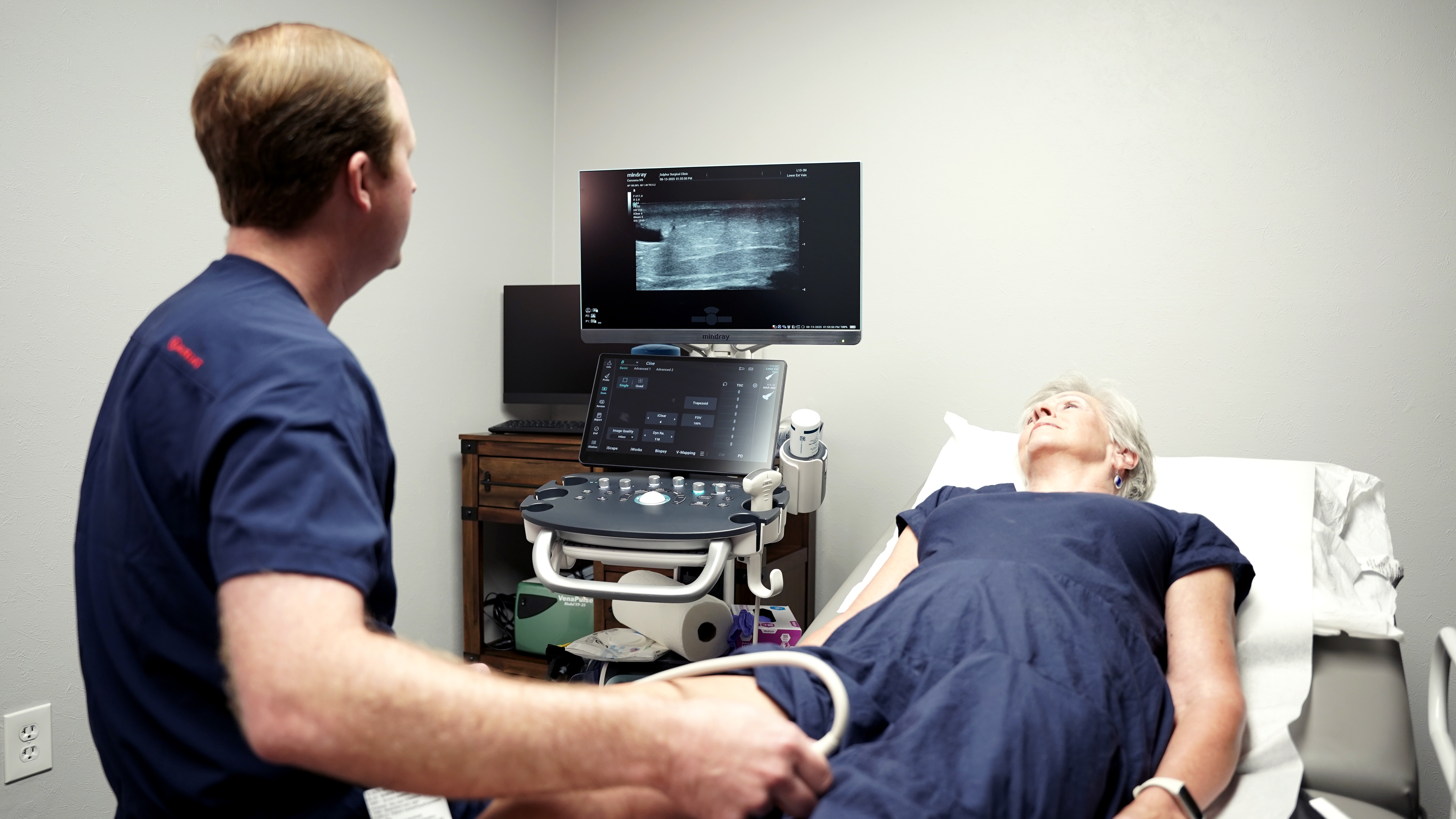
Most people wait far too long before they finally call a vein specialist. The legs ache by evening, the veins grow a little more visible each summer, and there is always a reason the appointment can slide to next month: too busy, not sure it is worth the trouble, a quiet worry that it will all end in surgery or needles or a drawn-out fight with insurance. The reality tends to dismantle every one of those worries. Getting answers is calmer and simpler than almost anyone expects — a conversation with a surgeon first, a painless ultrasound on a separate day, and a follow-up visit where it all comes together into a plan. Nothing is done to you along the way, and nothing is decided without you.
We see patients from all over Southwest Louisiana at Lake Area Vein Center at Sulphur Surgical Clinic, and a good number of them tell us afterward that they only wish they had come in sooner. So here is exactly how the process works, step by step, so you know what you are walking into before you pick up the phone.
Before You Arrive: No Referral, No Special Prep
Two questions stop people more than any others, so let us settle them first. You do not need a referral from your primary care doctor to be seen. You can call us directly and get on the schedule. And there is nothing special to do to prepare for the first visit: wear or bring shorts if you have them, since your surgeon will want a good look at your legs, and that is about the whole list.
Consultations are available at both of our locations. Many patients see us at the Lake Charles office on West Sale Road, and we also see vein patients and handle follow-ups at the Sulphur Surgical Clinic office on Cypress Street. If you are driving in from Westlake, Moss Bluff, Iowa, or anywhere else across Calcasieu Parish, you can pick whichever office is the shorter trip.
The First Visit: A Conversation and an Exam
Your first appointment is with the surgeon, and it is exactly what a good first appointment should be: a conversation. You will talk through your symptoms — when the aching started, what makes it better or worse, how it affects your work and your evenings — along with your family history and anything you have already tried, like compression socks or putting your feet up. Then the surgeon examines your legs.
What this visit is not is a sales pitch. If your story and your exam point toward a vein problem, the next step is to measure it properly rather than guess. That measurement is the venous reflux ultrasound, and it is scheduled as its own appointment after your consultation. Before you leave, our staff will set up that ultrasound, start verifying your insurance benefits, and make sure you know what comes next. If your legs turn out to point somewhere other than veins, you will hear that honestly too.
The Mapping Ultrasound: Its Own Appointment, About an Hour
Between your first visit and your follow-up comes the heart of the evaluation: the venous reflux ultrasound, performed at a separate appointment that takes roughly 60 minutes. This is the study that turns “my legs bother me” into a real map of what is happening beneath the skin. One practical tip for that day: skip heavy lotion on your legs, because it can interfere with the ultrasound gel.
A trained sonographer performs the study. You will be positioned standing for part of it, because gravity is exactly what we are testing: we want to see how your veins behave under the same load they carry all day. The sonographer moves a small ultrasound probe along your leg with a bit of warm gel, applying gentle pressure here and there to watch how the blood moves. There are no needles and no dye. The most anyone usually feels is the light pressure of the probe and the coolness of the gel. It is genuinely painless.
Here is the part patients tend to enjoy: you can watch the screen the whole time. The ultrasound shows your veins in real time, and with color imaging, blood flowing the right way appears one color while blood flowing backward, or refluxing, shows up as another. When a valve has failed and blood is sliding back down the leg instead of being pushed up toward the heart, you can often see it happen right there on the monitor.
The study checks several things at once: which veins have failing valves, how severe the backward flow is, where it is distributed through the leg, and whether there is any sign of a blood clot. If you want the full detail on how this imaging works, and why we perform it in our own office rather than sending you to an outside facility, we have a dedicated page on our in-office vein ultrasound.
The Follow-Up Visit: Your Results in Plain Language
Once the mapping is complete, you come back to sit down with the surgeon and go over what the study found. This is where everything becomes a conversation about your legs specifically. Dr. Devin Seale, Dr. Stephen Castleberry, and Dr. Matthew Ayo each walk patients through results in plain language, without burying anyone in jargon. They are backed by the reputation Sulphur Surgical Clinic has built since 1975, more than fifty years of caring for families across this corner of Louisiana.
You will hear which veins are the source of the trouble and why they are producing the symptoms you have been feeling. A lot of what patients live with finally clicks into place here: the heaviness that sets in by late afternoon, the swelling that leaves sock marks at the ankles, the aching that eases the moment you put your feet up. When you can connect those symptoms to a specific vein the ultrasound showed refluxing, it stops feeling random. There is a reason for it, and reasons can be addressed.
This is also the moment to ask everything you have been wondering about — how serious the problem is, whether it is likely to get worse, and what happens if you do nothing. Our surgeons would far rather you leave with your questions answered than nod politely and drive home still uncertain. And if the ultrasound turns up something that needs prompt attention, such as a sign of a deep vein clot, we will tell you directly and act on it right away rather than send you off to wait and wonder. At any point in the process, sudden swelling, pain, warmth, or redness in one leg can be a warning sign of a clot and warrants prompt medical attention, so call your doctor or seek care right away rather than waiting on a scheduled appointment.
Building Your Treatment Plan
If the ultrasound confirms venous insufficiency, the next part of the conversation is what to do about it. There is no single answer that fits everyone, and the plan is built around what your specific anatomy showed on the screen.
For many patients, treatment of the underlying vein is a minimally invasive, same-day procedure. EVLT, or endovenous laser treatment, uses a thin laser fiber under ultrasound guidance to close a failing trunk vein; it is done under local anesthesia, patients walk out the same day, and its one-year closure rate runs above 95 percent. Varithena foam is an injectable option well suited to the twistier, branching veins a laser fiber cannot easily reach. Micro-phlebectomy removes bulging surface veins through openings so small they usually need no stitches. And for the fine red and blue spider veins that are purely a cosmetic concern, Asclera injections are an option, handled separately from the medical side.
The goal of the follow-up visit is not to schedule a procedure on the spot. It is to leave with a clear plan and an understanding of the sequence: what comes first, what your choices are, and what to expect from each step. You will not be pressured to decide anything in the room.
The Insurance Conversation
This is often the piece people dread most, so we try to make it as plain as possible. When vein treatment is medically necessary, meaning you have real symptoms and the ultrasound has documented reflux, most insurance plans cover it. The one thing worth knowing up front is that many plans require a period of conservative therapy first, usually a stretch of wearing prescription compression stockings, before they will authorize a procedure. That is the insurer’s rule rather than ours, and knowing about it early keeps it from becoming a frustrating surprise down the road.
Our staff handles the prior-authorization legwork on your behalf and verifies your benefits before anything is scheduled, so there are no financial surprises. We accept a wide range of plans across the major carrier groups, and you can look through the specifics on our insurance page. For the parts a plan will not cover, such as a purely cosmetic spider-vein treatment, which is self-pay, CareCredit financing is available so that cost does not have to be the thing that keeps you from getting care.
What the Whole Process Looks Like
Put together, the path from “my legs ache” to “here is the plan” is three easy appointments: a conversation and an exam with a surgeon, a painless hour-long ultrasound on a separate day, and a follow-up where you see your own veins mapped on the screen and hear, in words that actually make sense, what should happen next. No procedure is done to you along the way, and nothing is decided without you. For something people build up in their minds for years, it tends to land as a relief. The hard part, most of the time, was simply the waiting.
Frequently Asked Questions
Does the ultrasound hurt? No. The venous reflux ultrasound uses sound waves, not needles or dye. You will feel the light pressure of the probe and some cool gel on your skin, and that is all. Most patients find it relaxing, especially watching their own veins on the screen.
Do I need a referral to be seen? No. You can call Lake Area Vein Center directly and schedule a consultation without a referral from your primary care doctor. We do welcome referrals from other physicians, but they are not required.
Is everything done in one visit? No — and that is by design. The first visit is a conversation and an exam with the surgeon. The mapping ultrasound is its own appointment, scheduled between your first visit and your follow-up, and takes about an hour. At the follow-up, your surgeon reviews the map with you and builds the plan. Each step is quick, and our staff schedules them close together.
Will I get treated at the first visit? No. The first visit is for evaluation and planning. If a procedure is recommended after your ultrasound, it is scheduled for a later date, and if your plan requires a period of compression therapy first, that starts before anything is booked.
Can I be seen in Sulphur instead of Lake Charles? Yes. Vein consultations and follow-ups are available at both our Lake Charles office on West Sale Road and the Sulphur Surgical Clinic office on Cypress Street. Choose whichever is the more convenient drive for you.
Schedule Your Vein Consultation in Lake Charles or Sulphur
If your legs have been telling you something for a while, the first appointment is the low-stakes way to finally get answers. It is an honest conversation with one of our surgeons, a painless ultrasound, and a plan you helped build, with no referral needed and no procedure on day one.
Lake Area Vein Center at Sulphur Surgical Clinic serves patients throughout Lake Charles, Sulphur, Westlake, Moss Bluff, Iowa, and across Calcasieu Parish.
Call (337) 425-9300 to schedule your vein consultation today. No referral required.
Our offices:
- Lake Area Vein Center — Lake Charles office · 1920 W Sale Rd, Suite 5, Lake Charles, LA · (337) 425-9300
- Sulphur Surgical Clinic · 914 Cypress St, Sulphur, LA 70663 · (337) 527-6363
This blog is for general informational purposes only and does not constitute medical advice. Consult with a qualified healthcare provider for guidance specific to your situation.
Ready to map what's going on with your veins?
Every patient starts with a consultation and exam with one of our surgeons; the mapping ultrasound is its own appointment. Call our front desk and we'll get you on the schedule.