EVLT vs. Varithena: Which Vein Treatment Is Right for You?
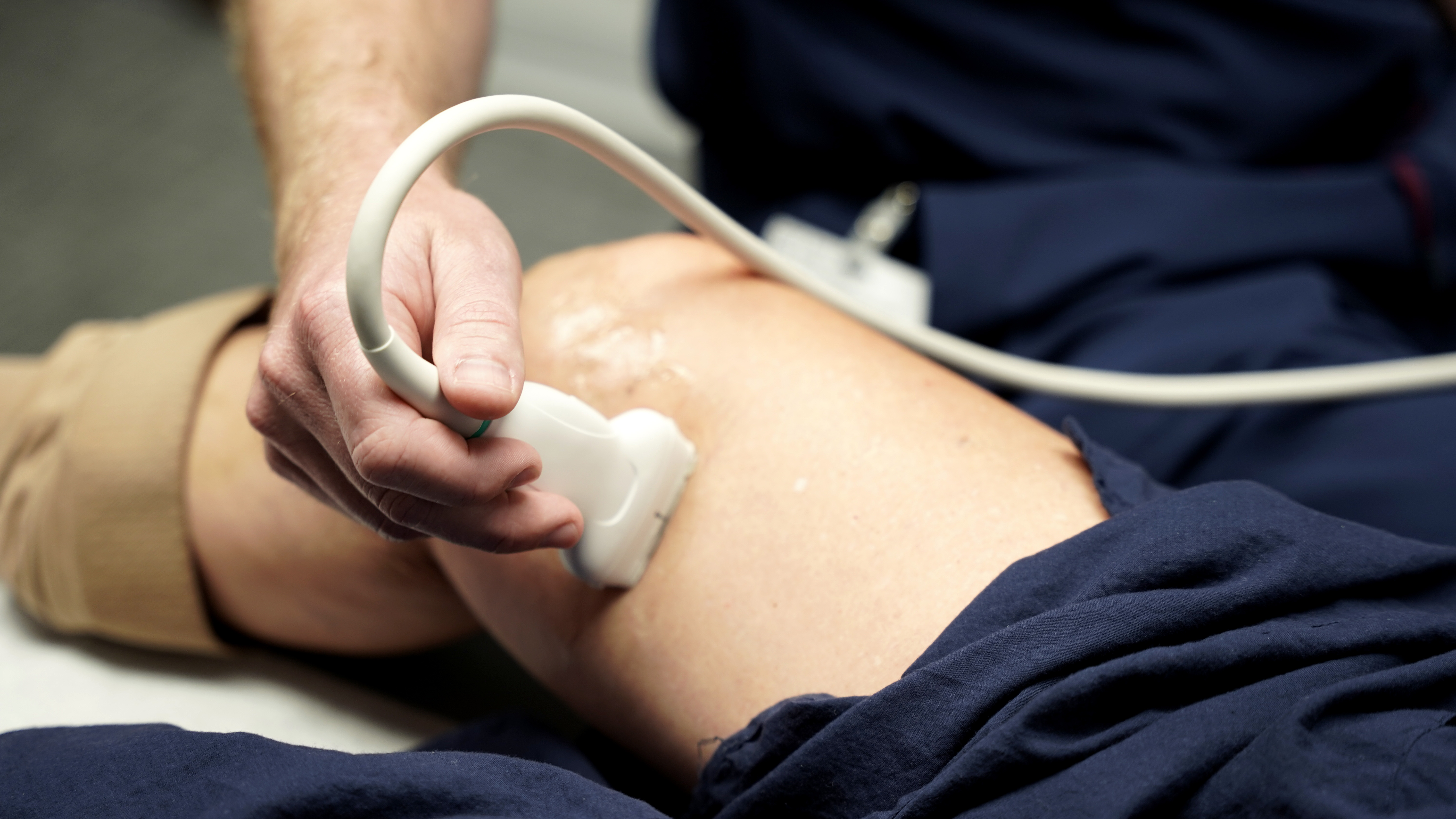
If you have been evaluated for venous insufficiency or varicose veins and your physician has mentioned both EVLT and Varithena as treatment options, you may be wondering: what is the difference, and which one is right for me?
This is one of the most common questions we hear at Lake Area Vein Center at Sulphur Surgical Clinic. Both EVLT and Varithena are minimally invasive, highly effective treatments for venous insufficiency and varicose veins — but they work differently, target different anatomy, and are best suited to different patient profiles.
Here is a clear, side-by-side look at both treatments so you can walk into your consultation informed and confident.
The Common Ground: What Both Treatments Share
Before diving into the differences, it is worth understanding what EVLT and Varithena have in common — because for patients used to thinking of vein treatment as something that requires a hospital admission and significant recovery, both options may surprise you.
- EVLT is performed at Imperial Calcasieu Surgical Center — same-day outpatient procedure, no overnight stay
- Varithena is performed in our Lake Charles office — no surgical center required
- Both use local anesthesia — no general anesthesia or IV sedation required
- Both are same-day procedures — you arrive, are treated, and go home the same day
- Both allow immediate return to light activity — most patients walk out and resume their daily routine
- Both work by permanently closing diseased veins — blood reroutes naturally through healthy veins nearby
- Both are covered by most insurance plans when venous insufficiency is medically documented
- Both deliver significant, lasting relief from the pain, heaviness, and swelling of venous disease
The question of which treatment is right for you comes down to the anatomy of your venous disease — specifically, which veins are diseased and how they are distributed. This is determined by your venous reflux ultrasound evaluation.
Endovenous Laser Treatment (EVLT): The Deep Root Solution
What It Treats
EVLT is the preferred treatment for large trunk veins — particularly the great saphenous vein (GSV) and small saphenous vein (SSV), which run the length of the leg just beneath the skin. These are the primary “source” veins in most cases of venous insufficiency. When the valves in the GSV or SSV fail, they allow reflux that creates elevated pressure throughout the entire downstream venous system — causing varicose veins, swelling, and pain throughout the leg.
Treating the root cause — the incompetent trunk vein — is the foundation of effective venous insufficiency management. EVLT does exactly this.
How It Works
Under real-time ultrasound guidance, your physician inserts a thin laser fiber into the diseased vein through a tiny needle puncture — no incisions. A local anesthetic is infused around the vein to numb the area and protect surrounding tissue. The laser fiber then delivers controlled thermal energy along the length of the vein as it is slowly withdrawn, causing the vein wall to collapse and seal permanently. The closed vein is gradually absorbed by the body over the following weeks.
The Procedure
- Setting: Imperial Calcasieu Surgical Center (outpatient, same-day)
- Duration: 45–60 minutes
- Anesthesia: Local (tumescent anesthesia along the vein)
- Incisions: None — single needle entry point
- Immediate activity: Walking encouraged immediately after
- Return to work: Most patients within 1–2 days
- Compression: Home in an ACE wrap; compression stocking from the next morning (post-procedure day 1), worn for 2 weeks
- Follow-up: DVT ultrasound (a check of the deep veins for blood clots) at 1–2 weeks
Ideal Candidate for EVLT
- Venous insufficiency with documented reflux in the great or small saphenous vein
- Straight, accessible trunk vein anatomy on ultrasound
- Patients who want to address the root cause of their venous disease
- Patients with significant varicose veins fed by a refluxing trunk vein
Varithena: The Flexible Foam Option
What It Treats
Varithena is an FDA-approved prescription microfoam that is best suited for treating varicose veins with more complex, branching anatomy — including tortuous (twisty) veins that a laser fiber cannot easily navigate, accessory veins alongside the main trunk, and varicose tributaries that remain after trunk vein treatment. It is also an excellent option when the diseased vein segment is above the knee, in challenging anatomical locations, or when the trunk vein itself is not the primary driver of disease.
In some cases, Varithena may be used after EVLT to treat residual varicose tributaries — the two treatments complement each other well.
How It Works
A small amount of Varithena foam — a proprietary, precisely formulated mixture of polidocanol and carbon dioxide/oxygen — is injected directly into the diseased vein under ultrasound guidance through one or two needle sticks. The foam displaces blood within the vein and causes the vein wall to spasm, contract, and ultimately close. The treated vein is then absorbed by the body over time, and blood reroutes through healthy adjacent veins.
Unlike traditional liquid sclerotherapy, Varithena foam holds its position in the vein more effectively, allowing treatment of longer segments with a smaller volume of medication.
The Procedure
- Setting: Lake Area Vein Center office in Lake Charles
- Duration: Under 60 minutes (often 30–45 minutes)
- Anesthesia: Topical or none — minimal discomfort
- Needle sticks: Typically 1–2
- Incisions: None
- Immediate activity: Walking encouraged immediately after
- Return to work: Same day for most patients
- Compression: Home in an ACE wrap; compression stocking from the next morning (post-procedure day 1), worn for 2 weeks
- Follow-up: DVT ultrasound (a check of the deep veins for blood clots) at 1–2 weeks
Ideal Candidate for Varithena
- Varicose veins with tortuous, branching, or irregular anatomy not easily treated with laser
- Above-knee great saphenous vein incompetence
- Patients who want a needle-stick-only option with minimal preparation
- Residual varicose tributaries after prior trunk vein treatment (EVLT or other ablation)
- Patients with anatomy or medical history that makes thermal ablation less suitable
EVLT vs. Varithena: Side-by-Side Comparison
| EVLT | Varithena | |
|---|---|---|
| Best for | Large trunk veins (GSV, SSV) | Tortuous varicosities, tributaries, above-knee GSV |
| Setting | Imperial Calcasieu Surgical Center | Lake Area Vein Center office |
| Mechanism | Thermal laser energy seals vein | Foam chemical causes vein to close |
| Anesthesia | Local (tumescent) | Minimal to none |
| Entry points | One needle puncture | 1–2 needle sticks |
| Procedure time | 45–60 min | 30–45 min |
| Same-day return | Yes | Yes |
| Return to work | 1–2 days | Same day for most |
| Compression required | Yes (2 weeks) | Yes (2 weeks) |
| Insurance coverage | Yes (when medically indicated) | Yes (when medically indicated) |
| Long-term success | >95% closure at 1 year | High; single session often sufficient |
Can You Have Both?
Yes — and in many patients, combining EVLT and Varithena produces the most comprehensive outcome. A common treatment sequence:
- EVLT first to close the refluxing trunk vein and eliminate the source of elevated pressure
- Varithena afterward (often in a second session) to treat residual varicose tributaries that did not resolve on their own after trunk closure
Your venous reflux ultrasound will map the full extent of your venous disease and help your physician at Lake Area Vein Center design the most effective treatment sequence for your anatomy.
How We Decide: The Role of Your Ultrasound
The most important factor in choosing between EVLT and Varithena — or recommending both — is what your venous reflux ultrasound shows. No two patients have identical venous anatomy, and treatment should never be one-size-fits-all.
At your consultation at Lake Area Vein Center, your physician will:
- Perform or review a venous reflux ultrasound mapping your leg veins
- Identify which veins have incompetent valves and the severity of reflux
- Assess the size, location, and tortuosity of the diseased veins
- Review your symptoms and their impact on your daily life
- Discuss your goals, preferences, and any relevant medical history
- Recommend the treatment approach — EVLT, Varithena, or a combination — that is most likely to give you lasting relief
You will leave your consultation with a clear picture of what your venous disease looks like and a personalized plan to treat it.
Insurance and Cost
Both EVLT and Varithena are covered by Medicare, Medicaid, and most commercial insurance plans when venous insufficiency is medically documented — meaning you have symptoms (pain, swelling, skin changes), reflux confirmed on ultrasound, and have completed a trial of conservative therapy (compression stockings). Our team handles insurance prior authorization on your behalf.
For patients with out-of-pocket costs or those pursuing cosmetic vein treatment, CareCredit financing is accepted at Lake Area Vein Center.
Frequently Asked Questions
Which treatment is better — EVLT or Varithena? Neither is universally “better” — the right choice depends on your specific venous anatomy and the pattern of your disease. EVLT is the preferred first-line treatment when a large trunk vein is the primary source of reflux. Varithena is preferred for complex or tortuous varicosities, above-knee disease, or as a complement to prior ablation. Many patients benefit from both.
Is EVLT painful? EVLT involves tumescent anesthesia — a local anesthetic infused along the vein — which numbs the treatment area. Most patients feel pressure or mild warmth during the procedure but not pain. Post-procedure soreness and bruising along the treated vein are common for one to two weeks.
Is Varithena painful? Varithena involves only one or two needle sticks and requires little to no anesthesia. Most patients describe it as very well tolerated. Some mild cramping in the treated area can occur during injection. Post-procedure soreness is generally mild.
How quickly will I see results? With Varithena, many patients notice visible improvement in bulging veins within days to weeks. EVLT results develop over several weeks as the treated vein is absorbed by the body. Symptom relief — reduced pain, heaviness, and swelling — often begins within days of either procedure.
Do I need time off work? Most Varithena patients return to work the same day. EVLT patients typically take one to two days off. Neither procedure requires significant downtime.
Will my insurance cover these treatments? In most cases, yes — when venous insufficiency is medically documented with ultrasound and you have completed a conservative therapy trial. Our team verifies coverage before your procedure so there are no surprises. Call (337) 425-9300 and we will help you understand your benefits.
How do I get started? Call Lake Area Vein Center at Sulphur Surgical Clinic at (337) 425-9300 to schedule your vein consultation. No referral is required. We will perform a venous reflux ultrasound, evaluate your venous anatomy, and recommend the right treatment — or combination of treatments — for you.
Schedule Your Vein Consultation in Lake Charles, LA
Whether you need EVLT, Varithena, or both — the first step is the same: a venous reflux ultrasound and a conversation with one of our board-certified surgeons.
Lake Area Vein Center at Sulphur Surgical Clinic serves patients throughout Sulphur, Lake Charles, Westlake, Vinton, DeQuincy, and across Southwest Louisiana. Dr. Devin Seale, Dr. Stephen Castleberry, and Dr. Matthew Ayo are board-certified general surgeons who have made it their mission to bring expert vein care home — so you never have to drive to Houston or Baton Rouge for treatment that is available right here.
Call (337) 425-9300 to schedule your vein consultation today. No referral required.
Expert vein care, rooted in this community — right here at home.
Our offices:
- Lake Area Vein Center — Lake Charles office · 1920 W Sale Rd, Suite 5, Lake Charles, LA · (337) 425-9300
- Sulphur Surgical Clinic · 914 Cypress St, Sulphur, LA 70663 · (337) 527-6363
Ready to map what's going on with your veins?
Every patient starts with a consultation and exam with one of our surgeons; the mapping ultrasound is its own appointment. Call our front desk and we'll get you on the schedule.